
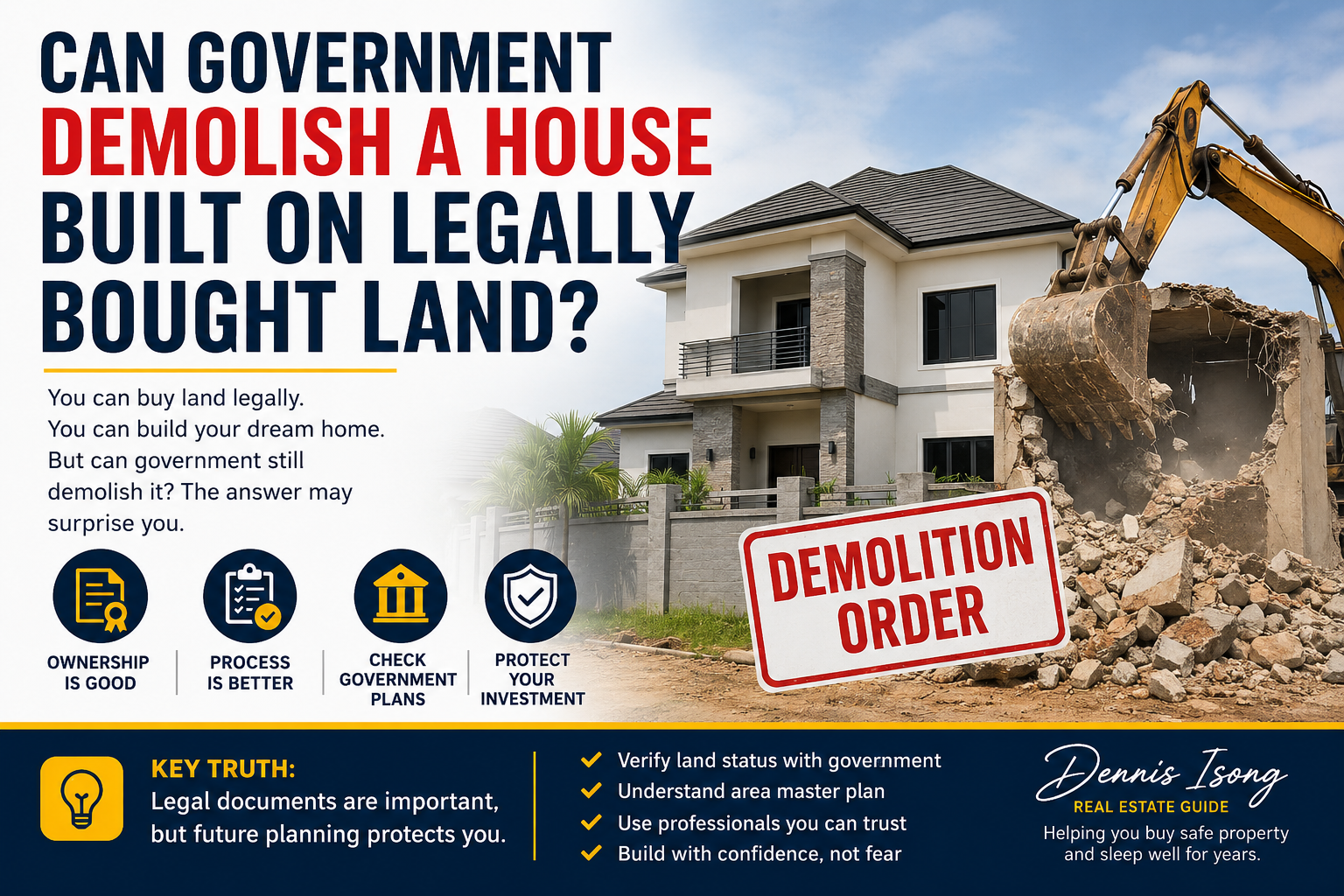
Many people believe that once they buy land legally and build a house, nothing can happen to that property.
That sounds reasonable.
But this is where many property owners get shocked.
What if the government comes years later and marks the building for demolition?
Can that really happen?
The answer may surprise you.
Let Me Ask You An Important Question
When you bought the land, did you only check the documents?
Or did you also check what the government planned to do in that area in the future?
Many people focus only on ownership.
Very few people focus on future government plans.
That is where problems sometimes begin.
This Is Where Many People Get Hurt
You can legally buy land.
You can receive genuine documents.
You can build a beautiful house.
Yet the property can still face demolition if the land later falls within a government project, road expansion, drainage corridor, rail line, or other public infrastructure project.
This is why buying land is not only about ownership.
It is also about location planning and future land use.
A legal purchase does not automatically protect a property from every future government action.
The Pain Is Usually Very Deep
Imagine spending years saving money.
You buy land.
You build your dream home.
Your family moves in.
Then one day you see government markings on the wall.
The stress can be overwhelming.
Many people feel confused because they believe they did everything correctly.
I understand that fear.
This is one reason property buyers must go beyond documents alone.
Here Is The Moment Everything Becomes Clear
The real question is not only:
“Did I buy the land legally?”
The better question is:
“Was this land suitable for long-term development according to government plans?”
These are two different questions.
And both matter.
A Real Example
In 2023, a Nigerian living in the United Kingdom bought land through a trusted representative in the Lekki-Epe axis of Lagos.
The documents appeared genuine.
The land was properly purchased.
The mistake was simple.
Nobody checked the future development plans affecting the area.
Later, concerns emerged about planned infrastructure around nearby properties, creating fear among several landowners.
The buyer spent months trying to understand the situation before making further development decisions.
One missed check created years of uncertainty.
What Should You Do Before Building?
Check Government Land Records
Visit the relevant government land office and confirm the status of the property.
Ask if the land is affected by any current or proposed government project.
If you skip this step, you may discover problems after construction.
Your action: Confirm land status directly with government authorities before building.
Study The Area Master Plan
Many buyers never look at development plans.
Yet these plans often reveal future roads, drainage systems, rail corridors, and public projects.
A property may be safe today but affected tomorrow.
Your action: Ask to review planning information for the area before construction begins.
Verify The Survey Properly
A survey plan does more than show boundaries.
It can help identify whether the land conflicts with government interests.
Independent verification matters.
Your action: Verify the survey through the appropriate government channels.
Use Experienced Professionals
Many property losses happen because people rely only on sellers.
A qualified surveyor, lawyer, and property professional can help identify risks early.
Process protects money.
Your action: Build a professional team before making major property decisions.
The Truth Many People Do Not Hear
A house can be built on legally purchased land and still face government action under certain circumstances.
That is why property safety is a process.
It is not a single document.
It is not a single payment.
It is a series of checks done correctly.
Ownership is legal, but protection requires planning.
Let Me Recap
If you buy land legally, that is a good first step.
But it is not the last step.
You must also understand government plans, infrastructure projects, land status, and future development risks.
The safest buyers are usually not the fastest buyers.
They are the most careful buyers.
One Warning You Must Never Ignore
Never assume that genuine documents alone tell the whole story.
Always investigate what may happen around the property in the future.
That one step can save you years of stress.
Before I Go
I have helped many Nigerians in the diaspora and many in Nigeria buy land and houses they are happy with.
I can help you do the same.
I am the best guide if you want to buy property in Lagos and major states in Nigeria.
If you want your investment to make plenty money now for you to enjoy and still take care of you when you are old, you must learn how to buy the right property that will not give you stress. That is why I write articles like this to help you buy safe property without fear.
The goal is not just to own property.
The goal is to own property with peace of mind.
If this helped you understand the process better, you can clap so others can find it.
What is the biggest concern you have about buying property in Lagos?
